- Solar AI
- Posts
- 2,000 GW: The Number That Just Changed Everything for Australian Solar
2,000 GW: The Number That Just Changed Everything for Australian Solar
As you are gearing up for the long weekend - ARENA's 30-30-30 target could create the biggest solar market on Earth. Feed-in tariffs are racing to zero — and why that's actually good news for smart installers.

Neel Bhattacharya
April 02, 2026
THE SOLAR AI
G'day energy professionals,
Last Wednesday, a group of researchers from ANU and UNSW dropped a number that should be pinned to the wall of every solar business in Australia.
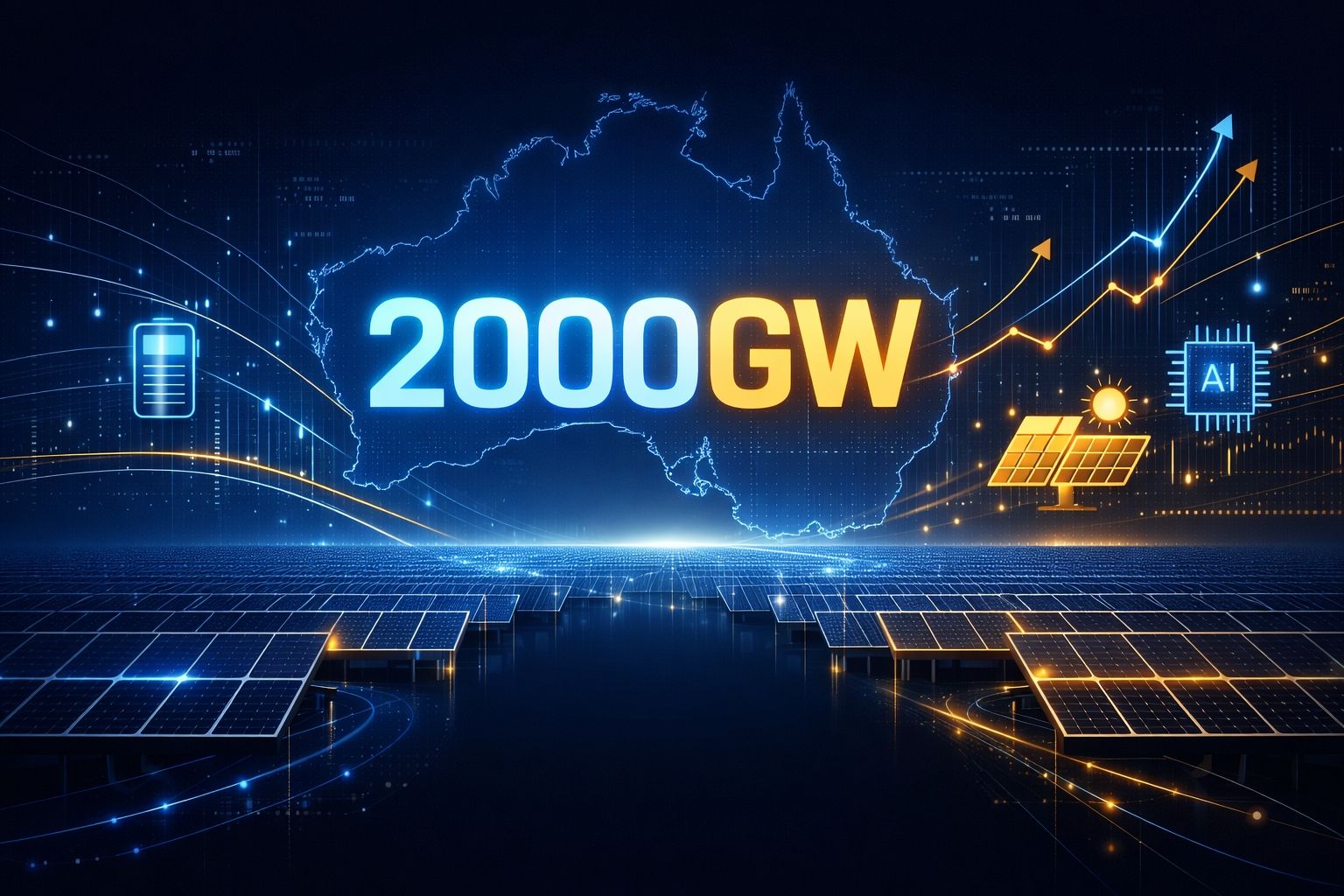
2,000 GW.
That is the potential size of Australia's solar PV market if ARENA's ultra-low-cost solar targets land. Not a forecast for 2050. A modelled pathway that starts now. Meanwhile, feed-in tariffs are quietly dying across every state, battery rebates are about to take another hit, and most installers I talk to are still quoting the same way they did in 2023.
This week: the biggest opportunity shift in a decade, what it means for your pipeline, and the one move top installers are making that the rest are not.
LET'S STEP INSIDE
THE 2,000 GW NUMBER AND WHY IT SHOULD CHANGE HOW YOU SELL
Last week, the Australian Centre for Advanced Photovoltaics (ACAP) published the first integrated modelling to quantify what happens if ARENA's 30-30-30 ultra-low-cost solar program achieves solar electricity at
30 cents per watt,
30 percent module efficiency, and a
30-year module lifetime.
The result? A 2,000 GW-scale solar PV market in Australia delivering 1,000 TWh/year for domestic use and 2,600 TWh/year for export.
What this means for your business right now: 1. The conversation with homeowners just changed. Solar is no longer "save on your bill." It's "your home becomes part of Australia's clean energy export economy." That's a bigger story. Bigger systems. Bigger deals. 2. Battery + solar bundling is now the default play. With feed-in tariffs collapsing (more on that below), self-consumption and storage are the value drivers. 3. Commercial and industrial is about to explode. Green metals, green hydrogen, data centres all need massive solar. The installer who builds relationships with C&I developers now will ride a wave that hasn't even started cresting.
Deep dive: The Solar Sales Revolution: How AI Solves the Solar Industry's Biggest Conversion Crisis
THE ELEPHANT IN THE ROOM

elephant in the room
Let's talk about the elephant in every solar sales conversation.
Feed-in tariffs are racing towards zero across Australia. Victoria removed its regulated minimum in July 2025. NSW introduced export charges during peak solar hours. Queensland slashed regional FiTs by 30%. South Australia dropped minimum guarantees entirely.
The national picture for 2026, according to Bluetti's latest analysis:
State | Typical FiT Range | The Reality |
|---|---|---|
NSW | 10c/kWh | Capped at first 10 kWh/day. Some plans now charge for exports. |
VIC | 10c/kWh | No regulated minimum. Retailer-driven. Among the lowest in Australia. |
QLD | 10c/kWh | Common daily caps at ~10 kWh. Regional rates slashed 30%. |
SA | 8c/kWh | No minimum guarantee. Fully competitive retail market. |
Here's the part most installers get wrong: they treat this as bad news. It's not. It's a selling machine.
Every homeowner who bought solar in the last 5 years on the promise of "great feed-in tariffs" is now watching their returns shrink. They're confused. They're frustrated. And they're searching for answers.
The winning pitch:
"Your feed-in tariff was paying you 12c a few years ago. Now it's 4c. By next year, it could be 2c. But here's the good news a battery changes everything. Instead of selling power at 4c, you store it and avoid buying at 35c. That's an 8x swing in value. The rebate to add a battery drops on May 1. This is the window."
That's not a hard sell. That's education. And it works because it's true.
Related: How to Reduce Solar Appointment No-Shows by 67%: The Complete Prevention System
THE ESSENTIALS
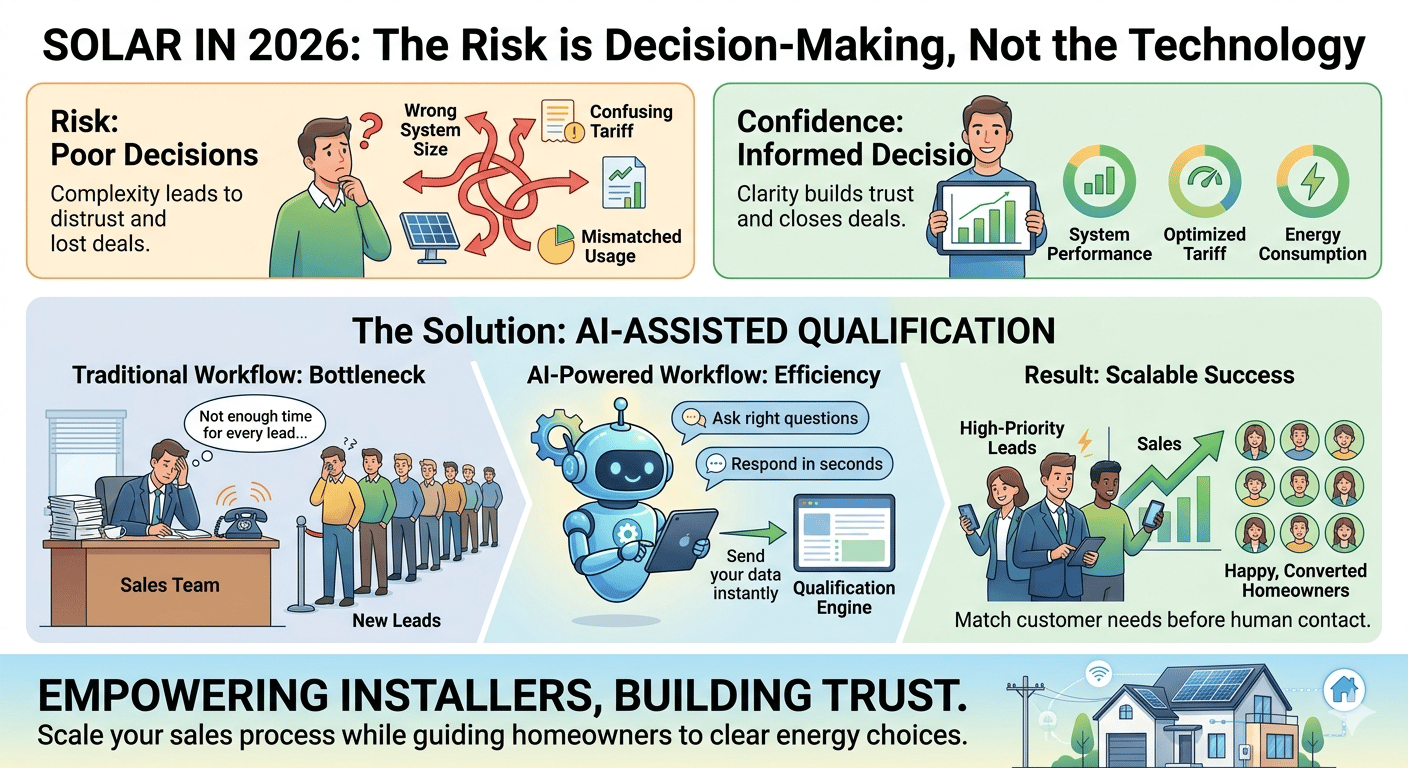
Energy Matters published a piece this week that every solar professional should read. The headline: "The New Risk for Solar Buyers in 2026: Misinformation."
The gist: homeowners aren't making bad decisions because solar is complicated. They're making bad decisions because the information they're relying on is outdated.
- FiT rates from 2 years ago
- Battery payback models that don't reflect current tariff structures
- System sizing based on old consumption patterns
Their conclusion: "Solar isn't the risk in 2026. The decisions behind it are."
This is your opening. The installer or the business who can cut through the noise” who can show a homeowner exactly how their system, tariff, and usage pattern work together — is the one who earns the trust and closes the deal.
Most businesses don't have the bandwidth to do this for every lead. That's where AI-assisted qualification comes in (refer the pics 🙂 )
How the best companies are doing this: AI vs. Human Solar Sales Teams: Why the Future is Hybrid
---
THE MAY 1 DEADLINE IS NOW 31 DAYS AWAY
If you read last week's edition, you know the federal battery rebate is about to drop. Here's the quick refresh:
- Current rebate: $311/kWh May 1: $252/kWh (and drops again every 6 months)
- Small batteries (<14 kWh): Still 100% rebate after May 1
- Medium (14-28 kWh): Drops to 50c 60% rebate
- Large (28-50 kWh): Less than 20% rebate
- For a 30-kWh system: That's a $1,770 difference for the same install
The Clean Energy Regulator confirmed the changes last month. The STC factor will decline at a higher rate every 6 months going forward.
If you haven't already sent a reactivation sequence to every unsold battery quote from the last 6 months do it today. Not tomorrow. Today.
Template that's working right now (30-40% reply to rates):
"Hey [Name], quick update the federal battery rebate drops by ~20% on May 1. For a system like the one we quoted you, that's roughly $1,770 more if you wait. Happy to lock your quote in before the deadline. Want me to hold your spot?"*
THE WATT'S NEXT PODCAST JOIN THE WAITLIST
In Q2 2026, we're launching The Watt's Next: Conversations at the Intersection of Energy, AI & Sustainability.
We don't just want listeners. We want participants.
Early Access: First 500 people get the Solar AI Strategy Pack — a breakdown of how we're using AI Voice to 2x conversion rates right now. Plus raw, unedited episodes before they hit Spotify.
Join the Guest Waitlist (30 seconds. I promise.)
We're capping this group. If you're building the future of Australian energy, this is your room.
KEEP READING:
- The 5-Second Rule: Why Instant Lead Response is Make-or-Break for Solar Businesses
- The Ultimate Solar Lead Qualification Framework: BANT is Dead
- How to Turn Your Solar ROI Calculator into a Lead Generation Machine
If this edition gave you a clearer way to talk about the 2,000 GW opportunity with your team or your customers, there are two quick ways you can help more people see it:
Forward this email to one person in your network who runs, sells for or advises a solar or clean-energy business
Share the main article on LinkedIn and tag www.thesolarai.com so I can join the conversation
The more operators who understand what 2,000 GW actually looks like on the ground, in rooftops, warehouses and industrial estates, the faster we can move from hype to executed projects.
Until next time,
Neel

Helping Australian solar businesses build sales engines worthy of a 2,000 GW future.